Chapter 05·5 min read
Hospitality Concepts & Development
A hotel begins long before its first guest arrives.
The project
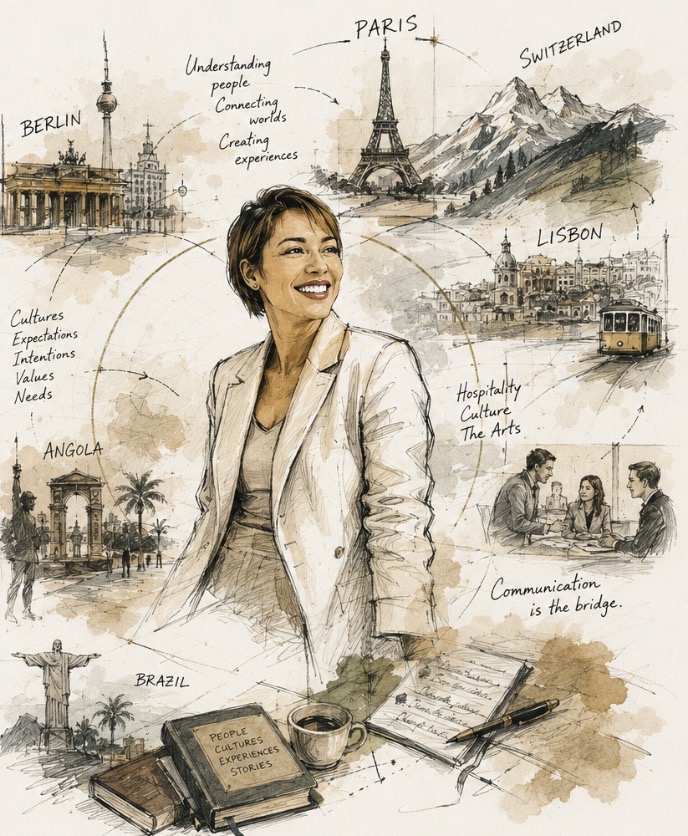
Hotel Bikuku, Angola (2011–2012) — hospitality and marketing concept for a hotel project still under construction, developed alongside the engineers, architects, interior designers and the client, with travel to Angola for on-site meetings.
The Wall Museum Berlin — a cultural-hospitality concept, treated with the same discipline as a hotel positioning: storytelling, visitor experience, spatial design.
The objective
To imagine the guest before the walls existed. To let the eventual experience shape the building rather than the other way around.
My role
Hospitality positioning, guest-journey thinking, operational thinking, atmosphere, interior concept collaboration, marketing vision — contributing alongside the architects and the client during the earliest stages of development.
A hotel begins long before its first guest arrives.
I help shape the guest experience from the very beginning, connecting concept, operations and atmosphere into one coherent vision.
This work is not project management. It is conceptual thinking, done at the stage when a project is still argument and paper.
Hotel Bikuku — Angola, 2011–2012.
The building was still under construction. I worked alongside the engineers, architects, interior designers and the client, and travelled to Angola for meetings on site. My contribution was the hospitality and marketing concept: positioning, guest journey, operational thinking, atmosphere, hospitality identity, interior concept, service philosophy — the questions that decide what a hotel will feel like long before it decides what it will look like.
I found myself walking the site imagining sound, not layout. Where would a suitcase land. Where would a first cup of coffee be poured. Which window would a guest photograph without thinking.
Bikuku is also where a later direction began. Standing inside an unfinished building and describing the atmosphere it should one day hold turned my interest towards interiors and staging — how a space is dressed so that people read it correctly — and, from there, towards training in film and set design, where that same question is asked one room at a time.
Wall Museum Berlin.
A different kind of hospitality — a cultural institution — but the same underlying question. How does a visitor arrive, understand, feel, remember. Storytelling, communication, visitor experience and spatial design treated together, as a single act of welcome.
The process always begins the same way: listening, observing, understanding the people and the place. Only then developing ideas that connect identity, function and experience.
The objective is never decoration. It is coherence — from the first impression to the final memory.
Drawing into feeling
Before
Architectural plans, materials, spec sheets.
After
A story of a guest's morning, written from inside a room that did not yet exist.
What I learned
Hospitality is designed long before it is delivered. Guests may never notice the thinking behind a space — but they always feel it.